
FDA & INSURER CRITERIA
BMI Requirements for Wegovy
The FDA Standard
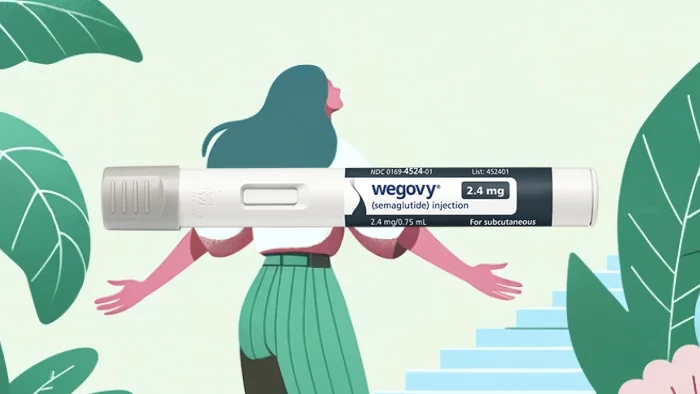
Wegovy is FDA-approved for adults with BMI ≥30 (obesity), or BMI ≥27 with at least one weight-related health condition (high blood pressure, type 2 diabetes, or high cholesterol).[1] Wegovy is also approved for children aged 12+ with BMI at the 95th percentile or higher. However, many insurers set stricter thresholds—and about 88% require prior authorization (PA), meaning your doctor must get approval before you can fill the prescription.[6]
Body Mass Index (BMI) is the primary metric insurers use to determine if you qualify for Wegovy coverage. Understanding these requirements—and how to document them properly—is critical to avoiding denials.
BMI Classification Chart
| BMI Range | Classification | Wegovy Eligibility |
|---|---|---|
| < 25 | Normal weight | Not eligible |
| 25 – 26.9 | Overweight | Not eligible (below FDA threshold) |
| 27 – 29.9 | Overweight | Eligible WITH comorbidity |
| 30 – 34.9 | Obese Class I | Eligible |
| 35 – 39.9 | Obese Class II | Eligible |
| ≥ 40 | Obese Class III | Eligible |
Note: Some insurers (like Cigna) require BMI ≥32—higher than the FDA label. Always check your specific plan's criteria.
For a complete overview of all eligibility requirements, see our full coverage guide.
MAJOR INSURER REQUIREMENTS
BMI Cutoffs by Insurer
Each insurer sets its own BMI threshold for Wegovy coverage. Here's what the major insurers require (see our insurance coverage hub for detailed insurer-specific guides):
| Insurer | BMI Threshold | Comorbidity Requirements | Key Notes |
|---|---|---|---|
| Aetna | ≥30 or ≥27 | 1+ comorbidity if BMI 27-29.9 | Follows FDA label; documentation required[2] |
| UnitedHealthcare | ≥30 or ≥27 | 1+ comorbidity if BMI 27-29.9 | Some plans require BMI ≥35 or ≥40[3] |
| Cigna | ≥32 or ≥27 | 2+ comorbidities if BMI 27-31.9 | Stricter than FDA—requires TWO comorbidities[4] |
| Blue Cross Blue Shield | ≥30 or ≥27 | 1+ comorbidity if BMI 27-29.9 | Varies by state/plan; verify with your plan[5] |
| Anthem | ≥30 or ≥27 | 1+ comorbidity if BMI 27-29.9 | Many plans exclude weight loss drugs entirely |
| Kaiser Permanente | ≥30 | Varies by plan | Limited formulary coverage; check your plan’s current criteria[6] |
Plan Variations
Even within the same insurer, requirements vary by plan type (HMO vs. PPO), employer, and state. Always request your specific plan's prior authorization criteria in writing before submitting.
OPTIONS FOR BMI 27-31
What If Your BMI Is 'Too Low'?
If your BMI falls between 27 and 31 and you've been denied, you're not out of options. Here's what you can do:
Document your health conditions thoroughly
FDA approval and most insurers allow coverage at BMI 27+ if you have qualifying health conditions. The key is documenting them with:
- Diagnosis codes in your medical record (your doctor handles this)
- Recent lab results (A1C blood sugar test, cholesterol panel, blood pressure readings)
- Sleep study results if you have sleep apnea
- Specialist notes confirming the condition
See the Comorbidities section below for qualifying conditions.
Check for historical BMI documentation
Some insurers accept your highest documented BMI from the past 1-2 years, not just your current measurement. If you've lost weight recently through diet and exercise, your historical BMI may still qualify you.
Ask your provider for: Weight records from the past 12-24 months showing your BMI history.
Request a peer-to-peer review
A peer-to-peer review is when your doctor speaks directly with the insurance company's medical director by phone. This is often more effective than written appeals because:
- Your doctor can explain clinical nuances the written record may not capture
- They can advocate for your specific situation
- A peer-to-peer call lets your doctor explain your case directly to the plan’s reviewer
Appeal based on weight cycling risk
If you've experienced weight cycling (yo-yo dieting), this can be a strong argument for medical necessity. Here's sample language your doctor can use:
"[Patient] has a history of weight cycling with multiple failed weight loss attempts. Research shows that repeated weight gain and loss increases heart disease risk and metabolic problems. Medication treatment with semaglutide is medically necessary to achieve lasting weight management and break this harmful cycle."
Your GLP-1 coverage,
denied approved
Honest Care writes personalized, evidence-backed appeal letters — so you can fight back with confidence.
Need help appealing?
Get Started FreePROPER DOCUMENTATION FOR APPROVAL
How to Document BMI
Many BMI-related denials happen because of documentation errors, not because you don't qualify. Here's how to document BMI correctly:
Documentation Checklist
- Height and weight measured within 30-90 days of submission
- BMI calculated and documented (not just height/weight)
- Measurement taken in a clinical setting (not self-reported)
- Date of measurement clearly recorded
- Provider signature on the documentation
Common BMI Documentation Mistakes
| Mistake | Why It Causes Denial | How to Fix |
|---|---|---|
| BMI not calculated | Insurer won't calculate it for you | Include explicit BMI calculation in notes |
| Outdated measurement | Most plans require BMI within 30-90 days | Get a current measurement before submitting |
| Self-reported weight | Insurers require clinical verification | Have weight measured at provider's office |
| Missing date | Can't verify recency of measurement | Always include date of measurement |
| Height/weight mismatch | Inconsistent records flag for review | Verify height is measured, not estimated |
BMI Calculation Formula
Make sure your documentation includes the correct calculation:
BMI = weight (kg) / height (m)²
Or in US units: BMI = weight (lb) × 703 / height (in)²
Example: A patient who is 5'8" (68 inches) and weighs 200 lbs:
BMI = 200 × 703 / (68)² = 140,600 / 4,624 = 30.4 kg/m²
QUALIFYING CONDITIONS FOR BMI 27-29.9
Health Conditions That Help
If your BMI is between 27 and 29.9, documenting weight-related health conditions is essential for coverage. Here are the conditions that qualify:[11]
| Health Condition | Diagnosis Code | Required Documentation |
|---|---|---|
| Type 2 Diabetes | E11.9 | A1C (3-month blood sugar average) ≥6.5%, fasting glucose ≥126 mg/dL, or glucose tolerance test ≥200 mg/dL; medication list |
| High Blood Pressure | I10 | Blood pressure readings ≥130/80 on 2+ occasions; medication list |
| High Cholesterol | E78.0, E78.2, E78.5 | Cholesterol panel showing LDL ≥130 or triglycerides ≥150 mg/dL |
| Sleep Apnea | G47.33 | Sleep study showing 15+ breathing interruptions per hour |
| Heart Disease | I25.2, I25.x | History of heart attack, stroke, or heart disease; cardiologist notes |
| PCOS (Polycystic Ovary Syndrome) | E28.2 | Hormone blood tests; pelvic ultrasound showing ovarian cysts |
| Fatty Liver Disease | K76.0 | Elevated liver enzymes (blood test); ultrasound or CT showing fat in liver |
Cigna Requires TWO Health Conditions
If your BMI is under 32 and you have Cigna, you need two or more documented health conditions to qualify. This is stricter than FDA requirements and most other insurers.[4]
How to Document Your Health Conditions
- Ask your doctor to include diagnosis codes (called ICD-10 codes) in their notes and on the prior authorization form
- Attach lab test results (blood sugar tests, cholesterol panels, liver function tests, etc.)
- Include diagnosis dates showing when each condition was first diagnosed
- Get specialist notes if available (heart doctor, diabetes specialist, etc.)
TEMPLATE FOR BMI DENIALS
Sample Appeal Letter
What Your Appeal Must Include
- Patient information (name, DOB, member ID, case/reference ID)
- The exact denial language being appealed
- Current BMI with date of measurement
- Historical BMI showing weight trend
- Documented comorbidities with ICD-10 codes
- FDA indication and clinical evidence
View BMI Appeal Letter Template
HEADER:
[Date]
[Medical Director Name]
[Insurance Company]
[Address]
Re: Appeal for [Patient Name]
Member ID: [Number]
DOB: [Date]
Case ID: [Number]
Denial Reason: BMI Criteria Not Met
OPENING:
"Dear Medical Director,
I am writing to appeal the denial of coverage for Wegovy (semaglutide) for [Patient Name]. The denial stated: '[copy exact denial language regarding BMI].'
I respectfully request reconsideration based on the following clinical documentation demonstrating that [Patient Name] meets both FDA-approved criteria and your plan's medical necessity requirements."
BMI DOCUMENTATION:
"Current BMI: [X] kg/m², documented on [date] at [clinic name].
Height: [X] in/cm | Weight: [X] lbs/kg
BMI History:
• [Date]: BMI [X]
• [Date]: BMI [X]
• [Date]: BMI [X]
[Patient]'s BMI meets the FDA-approved indication for Wegovy, which is approved for adults with BMI ≥30, or BMI ≥27 with at least one weight-related comorbidity."
COMORBIDITY DOCUMENTATION (if applicable):
"[Patient] has the following documented weight-related comorbidities:
• [Condition 1] (ICD-10: [code]), diagnosed [date]
• [Condition 2] (ICD-10: [code]), diagnosed [date]
Supporting documentation is attached, including recent lab results and specialist notes confirming these diagnoses."
CLINICAL RATIONALE:
"[Patient] has attempted lifestyle changes including [diet program, exercise regimen] for [X months/years] with [X%] weight loss that was not sustained.
Clinical evidence from the STEP 1 trial shows that semaglutide 2.4mg (the active ingredient in Wegovy) achieves 14.9% sustained weight loss at 68 weeks.[8] This is significantly better than diet and exercise alone, which achieved only 2.4% weight loss in the placebo group.
Additionally, the SELECT cardiovascular outcomes trial showed a 20% reduction in serious heart events (heart attack, stroke, and heart-related death) in patients with established heart disease.[9]
At [Patient]'s current weight and with their health conditions, continued obesity poses significant health risks including [list specific risks related to their conditions]."
CLOSING:
"Based on the above documentation, [Patient Name] meets the FDA-approved criteria for Wegovy and has demonstrated medical necessity for this treatment. I respectfully request that you reverse this denial and authorize coverage.
Please contact me at [phone] if you need additional information.
Sincerely,
[Provider Name, Credentials]
[NPI Number - your doctor's provider ID]"
Appeal Success Rate: ~44%
According to 2023 data, approximately 44% of insurance denials are successfully overturned on appeal.[12] Don't give up after the first denial—most patients who appeal have a reasonable chance of getting coverage. See our complete appeals guide for step-by-step help.
Official resources:
- Visit NovoCare's coverage resources for Wegovy-specific prior authorization support[7]
- Call NovoCare/CoverMyMeds for PA support: 1-844-865-3738 (Mon-Fri 8am-11pm ET, Sat 8am-6pm ET)
- Download the Wegovy Insurance Coverage Guide (PDF)
COMMON QUESTIONS ABOUT BMI REQUIREMENTS
Frequently Asked Questions
The FDA approved Wegovy for adults with BMI 30 or higher (obesity), or BMI 27-29 with at least one weight-related health condition like type 2 diabetes, high blood pressure, or sleep apnea. However, some insurers (like Cigna) require BMI 32 or higher, or two health conditions—stricter than the FDA allows. Always check your specific plan's requirements.
If your BMI is between 27 and 29.9, you need documented weight-related health conditions to qualify. First, make sure your health conditions are properly documented with diagnosis codes and lab results. Second, check if your insurer requires more than one condition (Cigna requires two). Third, consider your past weight—some insurers accept your highest BMI from the past 1-2 years, even if you've lost some weight since then.
Most insurers require BMI documentation within 30-90 days of your prior authorization request. The measurement must be taken at a doctor's office (not self-reported at home) and should include the date, your height, weight, and the calculated BMI number. Outdated measurements are a common cause of denials.
FDA-recognized weight-related conditions include: type 2 diabetes, high blood pressure, high cholesterol, sleep apnea, heart disease, PCOS (polycystic ovary syndrome), and fatty liver disease. Each condition must be documented with a diagnosis code (your doctor handles this) and supporting evidence like lab results or specialist notes.
Cigna sets its own coverage rules that are stricter than the FDA allows. Cigna requires BMI 32 or higher for GLP-1 weight loss drugs like Wegovy, or BMI 27+ with two or more health conditions (compared to just one for other insurers). This is Cigna's policy decision, not an FDA requirement. If you have Cigna, you'll need to meet their specific rules to get coverage.
YOUR PATH FORWARD
What's Next
Your GLP-1 coverage,
denied approved
Many insurance companies deny GLP-1 coverage on the first try — they count on people to give up, and most do.
✓ Free Appeal Letters✓ Premium Consultations Available
I was denied coverage for...
Get startedBMI Denials for Other GLP-1s
Similar BMI denial? The appeal strategies are comparable across medications:
References
- U.S. Food and Drug Administration. (2023). "Wegovy Prescribing Information." accessdata.fda.gov
- Aetna. (2024). "Clinical Policy Bulletin: Obesity Treatment." aetna.com
- UnitedHealthcare. (2025). "Plans with Weight Loss/Appetite Suppression Medication Coverage." uhcprovider.com
- Cigna. (2025). "Glucagon-Like Peptide-1 Agonists Prior Authorization Policy." cigna.com
- Tufts Medical Center. (2023). "How US Commercial Health Plans Are Covering Semaglutide (Wegovy) for Obesity Management." tuftsmedicalcenter.org
- GoodRx. (2025). "Insurance Coverage for GIP and GLP-1 Agonists Like Zepbound and Wegovy." goodrx.com
- Novo Nordisk. (2026). "NovoCare Wegovy Coverage Resources." novocare.com
- Wilding JPH, et al. (2021). "Once-Weekly Semaglutide in Adults with Overweight or Obesity." N Engl J Med. STEP 1 trial. PubMed 33567185
- Lincoff AM, et al. (2023). "Semaglutide and Cardiovascular Outcomes in Obesity without Diabetes." N Engl J Med. SELECT trial. ACC.org
- U.S. Food and Drug Administration. (2024). "FDA Approves First Treatment to Reduce Risk of Serious Heart Problems Specifically in Adults with Obesity or Overweight." fda.gov
- novoMEDLINK. (2025). "Wegovy Frequently Used ICD-10 Codes." novomedlink.com (PDF)
- Kaiser Family Foundation. (2023). "Claims Denials and Appeals in ACA Marketplace Plans." kff.org
Reviewed by Honest Care GLP-1 SpecialistsLast updated October 6, 2026
Disclaimer
The information on this page is for educational and informational purposes only and is not intended as medical advice. Honest Care does not provide medical diagnosis, treatment, or individualized recommendations. Always seek the advice of your physician or other qualified healthcare professional regarding any medical condition or treatment.
While this content has been reviewed for accuracy and balance, new evidence may emerge after publication. Drug availability, indications, and insurance coverage can change over time. Honest Care makes no warranties as to completeness or currentness of the information and is not responsible for decisions made based on this content.