
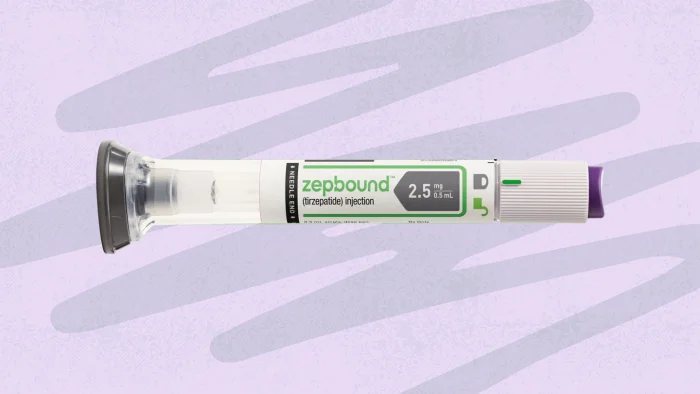
The FDA Approval
What Is Zepbound for Sleep Apnea?
The December 2024 FDA approval significantly changes access options for patients who've been denied Zepbound for weight loss. The OSA indication may create a more favorable medical-necessity pathway than weight-loss coverage alone.[1]
Your GLP-1 coverage,
denied approved
✓ Free Templates✓ Premium Support Available
I was denied coverage for...
Get starteddenied approved
Honest Care helps patients fight back:
Evidence-backed appeal letters — plus personalized guidance to appeal with confidence.
"I found Honest Care online and was very impressed with the letter... the appeal worked!"
"My Appeal was approved the next day. Thank you Honest Care!"
Key Facts About the OSA Approval
- Zepbound is not a replacement for CPAP—it's an adjunctive or alternative treatment targeting the underlying cause (excess weight)
- FDA approval based on SURMOUNT-OSA clinical trials showing significant AHI reduction
- Must be used with reduced-calorie diet and increased physical activity
- Works by reducing body weight, which decreases airway obstruction during sleep
Important Limitation
Zepbound is only effective for OSA related to obesity. Many cases of OSA are caused by jaw structure, upper airway anatomy, or other factors—Zepbound won't help those.[2]
How Well Does Zepbound Work?
Clinical Trial Results: SURMOUNT-OSA
The FDA approval was based on the SURMOUNT-OSA clinical trials—two 52-week studies examining tirzepatide in patients with moderate-to-severe OSA.[3]
| Outcome | Zepbound | Placebo | Difference |
|---|---|---|---|
| AHI Reduction (No PAP) | -25.3 events/hr | -5.3 events/hr | -20.0 events/hr |
| AHI Reduction (With PAP) | -29.3 events/hr | -5.5 events/hr | -23.8 events/hr |
| Weight Loss | -16–17% (~40 lbs) | -2% (~4–6 lbs) | ~35–40 lb difference |
| OSA Remission or Mild | 42–50% | 14–16% | ~3x higher |
| Hypoxic Burden Reduction | -61% to -70% | Minimal | Significant |
Key Takeaways
- Zepbound reduced breathing interruptions by 20–24 events per hour compared to placebo
- 42–50% of patients achieved OSA remission or mild classification after one year
- Average weight loss of 16–17% (approximately 40 lbs for a 250 lb patient)
- Hypoxic burden reduced by 61–70%
- Results were even better when combined with CPAP therapy
- Side effects were mostly GI-related (nausea, diarrhea) and mild-to-moderate—consistent with other GLP-1s
The Strategic Advantage
Why the OSA Indication Matters for Coverage
The OSA Pathway Advantage
If you have moderate-to-severe sleep apnea (AHI ≥15), you may be able to get Zepbound covered even when your insurance excludes weight loss medications.
The OSA indication unlocks coverage that weight loss alone cannot:
| Insurance Type | Weight Loss | OSA | Why It Matters |
|---|---|---|---|
| Medicare Part D | Bridge only (KwikPen; not if you have moderate-to-severe OSA) | May Cover (varies by plan) | Part D plans may cover Zepbound for OSA (formulary + PA vary); OSA goes through your plan, not the Bridge |
| TRICARE For Life | Ended Aug 2025 | Via Part D Only | TFL doesn't cover GLP-1s; OSA coverage (if any) comes through your Medicare Part D plan |
| Commercial (WL Exclusion) | Plan Exclusion | May Be Covered | OSA is often treated as medically necessary even when weight-loss drugs are excluded |
| Commercial (Step Therapy) | Requires Phentermine | May Have Fewer Requirements | May skip straight to Zepbound |
| Medicaid | Varies by State | Often Covered (Varies) | State coverage varies; OSA can strengthen medical-necessity rationale |
The key insight: If you have moderate-severe sleep apnea, getting diagnosed and using the OSA indication can bypass many of the barriers that block Zepbound for weight loss.
denied approved
Honest Care helps patients fight back:
Evidence-backed appeal letters — plus personalized guidance to appeal with confidence.
Eligibility Criteria
Who Qualifies for Zepbound Under OSA?
Universal Criteria Across Most Insurers
| Criterion | Requirement | Documentation |
|---|---|---|
| Age | ≥18 years | ID/DOB |
| BMI | ≥30 kg/m² (varies by plan) | Recent weight/height in medical record |
| OSA Severity | Moderate-to-severe: AHI ≥15 events/hour | Sleep study (PSG or home test) within 12 months |
| Diagnosis Confirmation | Established OSA diagnosis | Sleep specialist or PCP documentation |
| Lifestyle Requirement | Reduced-calorie diet + increased physical activity | Provider attestation |
Note on BMI Requirements
The FDA indication specifies "adults with obesity" without defining a specific BMI cutoff. Most insurers interpret this as BMI ≥30, though some plans may allow BMI ≥27 with comorbidities. Always verify your plan's specific criteria.
Additional Requirements by Insurer
Note: Requirements vary by specific plan and employer group. Always verify with your insurer's PA criteria.
| Insurer | Additional OSA Requirements |
|---|---|
| UnitedHealthcare | UHC’s commercial sleep apnea policy (P 1475-3) is Zepbound-only: BMI ≥30 and an AHI, REI or RDI over 15, plus other conditions; 6-month first approval. Criteria include PAP failure or PAP not being an option.[7] |
| Aetna | Verify with plan—OSA-specific criteria not publicly documented |
| Cigna | Verify with plan—OSA-specific criteria not publicly documented |
| Medicare Part D | Plan-specific—check formulary; PA typically required[8] |
What You DON'T Need for OSA Indication (Often)
- Weight-loss drug step therapy — No Phentermine, Qsymia, Saxenda trial required (though some plans require CPAP/PAP trial first)
- 6-month diet/exercise documentation — Shorter pathway
- Comorbidity requirement — OSA itself is the indication
Step-by-Step Pathway
How to Get a Sleep Apnea Diagnosis
Do I Have Sleep Apnea?
Common symptoms include:
- Loud snoring
- Waking up gasping or choking
- Morning headaches
- Daytime fatigue despite 7+ hours of sleep
- Partner noticing breathing pauses during sleep
If you have 2+ of these symptoms + BMI ≥30, ask your doctor about a sleep study.
1Talk to Your Doctor About Symptoms
Talk to Your Doctor About Symptoms
Mention snoring, daytime fatigue, gasping during sleep, or morning headaches. Your doctor can assess whether a sleep study is appropriate.
2Get a Sleep Study
Get a Sleep Study
Polysomnography (PSG) — In-lab sleep study (gold standard)
Home Sleep Apnea Test (HSAT) — Convenient at-home option
Both measure your AHI (Apnea-Hypopnea Index) — the number of breathing interruptions per hour of sleep.
3Get Your AHI Score
Get Your AHI Score
- Mild OSA: AHI 5–14
- Moderate OSA: AHI 15–29 ✓ In the moderate-to-severe range Zepbound's OSA indication covers (insurers add other criteria)
- Severe OSA: AHI ≥30 ✓ In the moderate-to-severe range Zepbound's OSA indication covers (insurers add other criteria)
4Document Obesity
Document Obesity
Ensure your weight and height are documented in your medical record within the last 30 days.
5Request Zepbound for OSA
Request Zepbound for OSA
Ask your prescriber to prescribe Zepbound specifically for OSA indication with correct ICD-10 codes:
- G47.33 — Obstructive sleep apnea (primary)
- E66.x — Obesity (secondary)
Timeline: Sleep study → diagnosis → PA submission can take a few weeks, depending on how soon you can get a sleep study.
CPAP Non-Compliance Can Help
If you already have CPAP and aren't using it (non-compliant), that can help your case. Insurers like UHC require documentation that PAP didn't work or isn't appropriate.
Is Zepbound a Replacement?
Zepbound vs. CPAP
Not a full replacement—but can be an alternative or complement.[2]
| Factor | Zepbound | CPAP |
|---|---|---|
| Mechanism | Reduces weight → reduces airway obstruction | Mechanically keeps airway open with air pressure |
| Effectiveness | 42–50% achieved remission/mild OSA | 90%+ effective when used correctly |
| Adherence | Weekly injection | Nightly mask—many struggle with compliance |
| Who It Works For | OSA related to obesity only | All types of OSA |
| Combination | Can be used WITH CPAP (better results) | N/A |
Best Candidates for Zepbound-Only
- Mild-to-moderate obesity-related OSA
- CPAP intolerant or non-compliant
- Prefer injectable medication over nightly device
Best Candidates for Zepbound + CPAP
- Severe OSA
- Want maximum AHI reduction
- Trial data showed better outcomes with combination
AASM Guidance
Zepbound may not cure sleep apnea in everyone. For some patients, combining Zepbound with CPAP, oral appliances, or surgery may be ideal.[2]
Common Denials & How to Fix
What If Your OSA Claim Is Denied?
| Denial Reason | What It Means | How to Fix |
|---|---|---|
| AHI too low | Sleep study showed AHI <15 | Repeat sleep study; document all events |
| BMI too low | BMI <30 | Document obesity-related comorbidities |
| Missing sleep study | PA submitted without PSG/HSAT | Attach sleep study to appeal |
| OSA not primary diagnosis | Coded for weight loss, not OSA | Resubmit with G47.33 as primary |
| Plan exclusion | Plan doesn't cover any GLP-1s | Appeal or explore cash-pay: LillyDirect ($299–$449/month), TrumpRx (lists Lilly's own self-pay prices) |
| CPAP trial not documented (UHC) | UHC requires PAP failure | Document CPAP intolerance or contraindication |
Appeal Strategy for OSA Denials
- Attach letter of medical necessity citing FDA approval and SURMOUNT-OSA trial data
- Include sleep study with AHI clearly documented
- Document why CPAP is not working or not appropriate (if required by insurer)
- Reference patient safety and clinical evidence
- If denied again, escalate to external review
For detailed appeal strategies, see our Zepbound Appeals Guide.
What Changed in 2025
Medicare Coverage for Zepbound OSA
Medicare May Now Cover Zepbound
Following the December 20, 2024 FDA approval, Medicare Part D plans may cover Zepbound for OSA (coverage varies by formulary and PA requirements). For weight loss alone, Medicare covers Zepbound only through the Medicare GLP-1 Bridge (Zepbound KwikPen only (not vials or single-dose pens), $50 per monthly fill)—and people with moderate-to-severe sleep apnea can't use the Bridge.[8]
| Question | Answer |
|---|---|
| Is Zepbound covered by Medicare? | Your Part D plan may cover Zepbound for moderate-to-severe sleep apnea, usually with prior authorization (for weight loss, only through the Bridge, which excludes people with moderate-to-severe OSA) |
| Do all Part D plans cover it? | No—check your plan's formulary; coverage varies |
| Is prior authorization required? | Usually yes |
| What's the out-of-pocket cost? | Part D out-of-pocket cap: $2,100 in 2026 ($2,400 in 2027); varies by plan tier |
| Does Medicare Advantage cover it? | If it includes Part D and lists Zepbound on formulary |
Action Step for Medicare Beneficiaries
Call your Part D plan, provide your Member ID, and ask: "Is Zepbound on formulary for obstructive sleep apnea, and what is the prior authorization process?"
For more details, see our Medicare Zepbound Coverage Guide.
Pricing Overview
Cost: What You'll Pay for Zepbound OSA
| Coverage Status | Estimated Monthly Cost |
|---|---|
| No insurance / cash pay | ~$1,086/month (list price) |
| LillyDirect (self-pay KwikPen or vials) | $299–$449/month[9] |
| TrumpRx (cash pay) | Lists Lilly's own self-pay prices (orders go through LillyDirect) |
| Commercial insurance (covered with PA) | Copay varies by plan (as little as $25 with the Savings Card) |
| Medicare Part D (may cover for OSA) | Varies; $2,100 in 2026 ($2,400 in 2027) annual out-of-pocket cap |
| Lilly Savings Card | As low as $25/month |
Savings Card Limitation
The $25 price needs commercial insurance that covers Zepbound. If your commercial plan excludes Zepbound, the card still brings the single-dose pen to $499/month (KwikPen: $299 / $399 / $449 a month by dose (KwikPen)). Not for Medicare, Medicaid, TRICARE, VA or other government insurance.
For full pricing details, see our Zepbound Cost Guide.
Impressive and successful!
My doctor did not even try to appeal when zepbound was originally denied, and the thought of appealing myself was overwhelming. I found Honest Care online and was very impressed with the letter and su...
I was denied coverage of my zepbound due to my company changed their requirements. After going over the appeal letter with my doctor (she was incredibly impressed) we submitted and got approved within...
Honest Care gets results!
My insurance refused prior authorization for Zepbound, but said I could file an appeal. I received my Appeal was approved the next day. Thank you Honest Care!
Zepbound for Sleep Apnea FAQs
Frequently Asked Questions
Yes. On December 20, 2024, the FDA approved Zepbound as the first FDA-approved medication for moderate-to-severe obstructive sleep apnea in adults with obesity.
Possibly. Your Part D plan may cover Zepbound for moderate-to-severe sleep apnea, usually with prior authorization. It goes through your plan's formulary and prior authorization, not the Medicare GLP-1 Bridge (people with moderate-to-severe sleep apnea can't use the Bridge). Check your plan's formulary for specific coverage details.
AHI ≥15 events per hour (moderate-to-severe OSA). Most insurers require documentation from a recent sleep study within 12 months.
In clinical trials, 42–50% of patients achieved remission or mild OSA after one year. However, weight must be maintained to continue the benefit—most people regain weight if they stop the medication.
It depends on your OSA severity and response to Zepbound. Some patients can replace CPAP; others benefit from using both together. Clinical trials showed better outcomes with combination therapy. Discuss with your sleep specialist.
No step therapy on other weight-loss medications (Phentermine, Qsymia, etc.) is typically required—a key advantage of the OSA pathway. However, many plans still require a trial of CPAP or PAP therapy first, or documentation of CPAP intolerance/failure.
No. You must have a documented diagnosis of moderate-to-severe OSA (AHI ≥15) confirmed by a sleep study. You cannot falsely claim OSA to get coverage.
Talk to your doctor about symptoms (snoring, daytime fatigue, gasping during sleep). They can order a sleep study (polysomnography or home sleep test) to measure your AHI. The process typically takes 2–4 weeks.
Yes, if you have sleep apnea symptoms and meet the criteria. Many patients denied for weight loss have undiagnosed OSA. Getting a sleep study and documenting AHI ≥15 can open a new coverage pathway.
TRICARE itself does not cover GLP-1s (including Zepbound) for weight-related indications, even OSA. However, for TRICARE For Life beneficiaries, Zepbound for OSA may be covered under their Medicare Part D plan (not TFL), subject to the plan's formulary, prior authorization and exceptions process. Check your Part D formulary for OSA coverage.
← Back to Zepbound Overview · How to Get Covered →
References
- U.S. Food and Drug Administration. (December 2024). "FDA Approves First Medication for Obstructive Sleep Apnea." https://www.fda.gov/news-events/press-announcements/fda-approves-first-medication-obstructive-sleep-apnea
- American Academy of Sleep Medicine. (December 2024). "Zepbound approved by FDA as first sleep apnea medication." https://aasm.org/zepbound-approved-fda-first-sleep-apnea-medication/
- Malhotra A, et al. "Tirzepatide for the Treatment of Obstructive Sleep Apnea and Obesity." New England Journal of Medicine. 2024. https://pubmed.ncbi.nlm.nih.gov/38912654/
- American College of Cardiology. "SURMOUNT-OSA: Tirzepatide for the Treatment of Obstructive Sleep Apnea and Obesity." https://www.acc.org/Latest-in-Cardiology/Clinical-Trials/2024/06/24/16/16/surmount-osa
- Eli Lilly and Company. "Zepbound Prior Authorization Resource Guide." https://zepbound.lilly.com/assets/pdf/zepbound_Prior_Authorization_Resource_Guide.pdf
- JAMA Network. (January 2025). "FDA Approves Tirzepatide as First Drug for Obstructive Sleep Apnea." https://jamanetwork.com/journals/jama/fullarticle/2829697
- UnitedHealthcare. "Zepbound (tirzepatide) – Obstructive Sleep Apnea Only: Prior Authorization Policy." https://www.uhcprovider.com/content/dam/provider/docs/public/prior-auth/drugs-pharmacy/commercial/r-z/PA-Non-Formulary-Zepbound.pdf
- Sleep Foundation. (December 2025). "Does Medicare Cover Zepbound for Sleep Apnea?" https://www.sleepfoundation.org/sleep-apnea/does-medicare-cover-zepbound-for-sleep-apnea
- Eli Lilly and Company. (December 2025). "Lilly Reduces Price of Zepbound Single-Dose Vials for Self-Pay Patients." https://www.pharmexec.com/view/lilly-reduces-price-of-zepbound-single-dose-vials-for-self-pay-patients
Disclaimer
The information on this page is for educational and informational purposes only and is not intended as medical advice. Honest Care does not provide medical diagnosis, treatment, or individualized recommendations. Always seek the advice of your physician or other qualified healthcare professional regarding any medical condition or treatment.
While this content has been reviewed for accuracy and balance, new evidence may emerge after publication. Drug availability, indications, and insurance coverage can change over time. Honest Care makes no warranties as to completeness or currentness of the information and is not responsible for decisions made based on this content.