
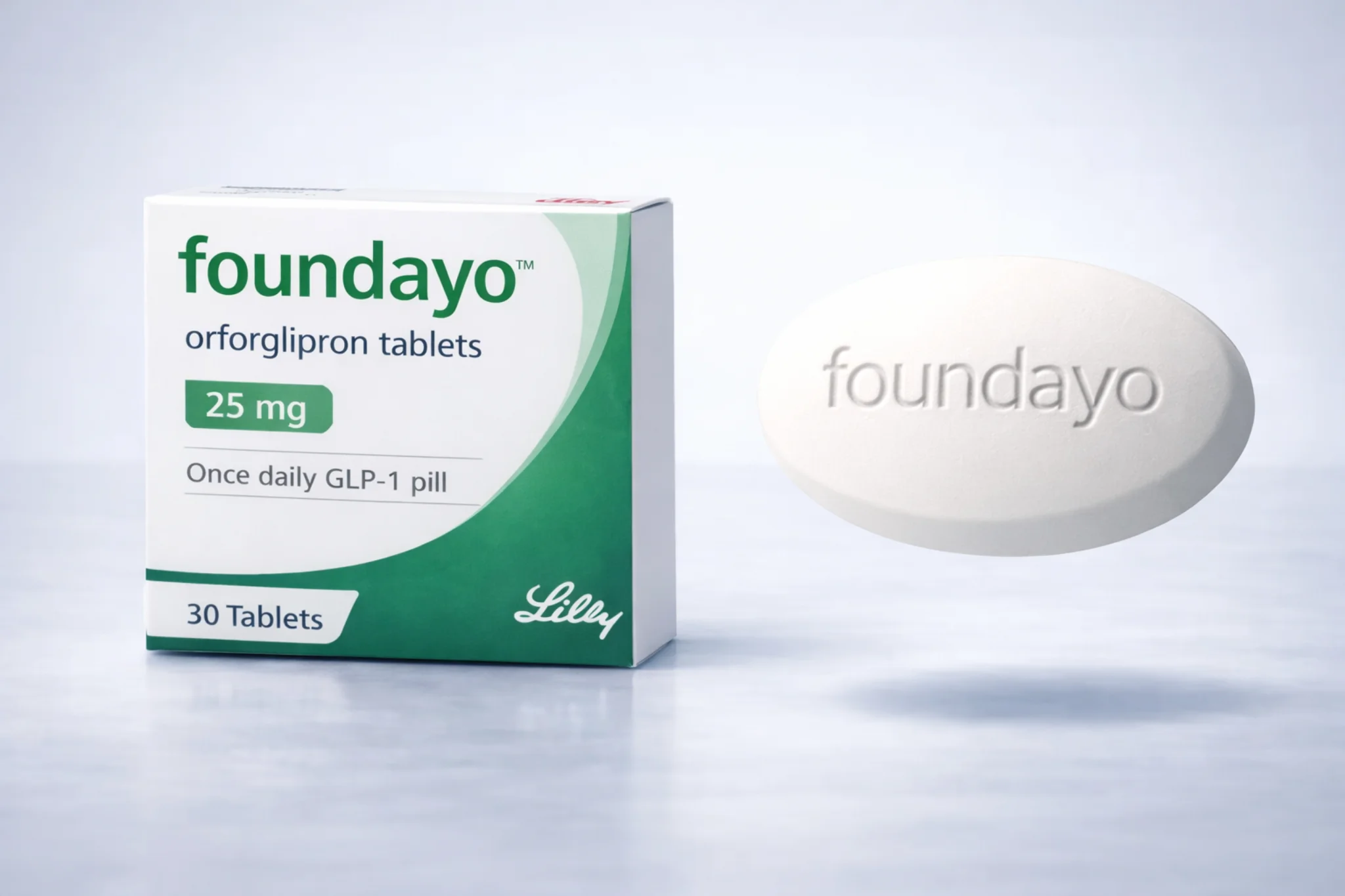
UNDERSTANDING YOUR DENIAL
Why This Denial Happens
You're Not Alone
Many GLP-1 prior authorization requests are denied initially. The most common reason? Insurers claim the medication isn't "medically necessary"—even when it clearly is.[1]
When your insurer says Foundayo is "not medically necessary," they're claiming one of these things:
They don't recognize obesity as a disease requiring treatment
Some insurers still treat obesity as a "lifestyle choice" rather than the chronic, relapsing disease it is. The AMA, WHO, and CDC all recognize obesity as a medical condition—but insurance policies haven't all caught up.
Your documentation doesn't prove you meet their criteria
Even if you qualify, missing or incomplete documentation can trigger a denial. Common gaps include:
- BMI (Body Mass Index) not documented within the last 30 days
- Comorbidities not listed with ICD-10 (diagnostic) codes
- No record of prior weight loss attempts
- Missing lab results
They classify weight loss as "cosmetic"
This is factually incorrect. Foundayo is FDA-approved to treat obesity—a medical condition with serious health consequences including cardiovascular disease, type 2 diabetes, and reduced life expectancy. It's not a cosmetic treatment.
The good news: Appeals work. With the right documentation and approach, 65%+ of appeals succeed.[2] Here's exactly how to do it.
For a complete overview of getting Foundayo covered, see our full coverage guide.
Your GLP-1 coverage,
denied approved
✓ Free Templates✓ Premium Support Available
I was denied coverage for...
Get starteddenied approved
Honest Care helps patients fight back:
Evidence-backed appeal letters — plus personalized guidance to appeal with confidence.
"I found Honest Care online and was very impressed with the letter... the appeal worked!"
"My Appeal was approved the next day. Thank you Honest Care!"
NEXT STEPS
How to Appeal
Medical necessity denials are highly appealable with proper documentation. You have 180 days from your denial date to file (for a Medicare drug plan denial: within 65 days from the date on the denial notice).
For the complete step-by-step appeal process, see our Foundayo Appeals Guide.
TEMPLATE & KEY ELEMENTS
Letter of Medical Necessity
What Your Letter of Medical Necessity (LOMN) Must Include
- Your information (name, date of birth, insurance member ID, case/reference ID)
- Your doctor's information (name, NPI number, specialty, contact)
- The exact denial language being appealed
- Your doctor's explanation for why Foundayo is medically necessary for you
- Supporting evidence (clinical trial data, medical guidelines)
- Clear request for the insurer to reconsider
View LOMN Structure Template
HEADER:
[Date] [Medical Director Name] [Insurance Company] [Address] Re: Appeal for [Patient Name] Member ID: [Number] DOB: [Date] Case ID: [Number]
OPENING:
"Dear Medical Director, I am writing to appeal the denial of coverage for Foundayo (orforglipron) for [Patient Name]. The denial stated: '[copy exact denial language].' I respectfully request reconsideration based on the following clinical information demonstrating medical necessity."
CLINICAL SUMMARY:
Include: Your diagnosis codes, BMI history, weight-related health conditions with lab results, and what treatments you've already tried.
EVIDENCE SECTION:
Cite the ATTAIN clinical trials, professional medical guidelines, and FDA approval information.
CLOSING:
"Based on the above clinical evidence, continued obesity without effective treatment poses significant health risks for [Patient Name]. Foundayo is medically necessary to reduce these risks and improve long-term outcomes. Please feel free to contact me at [phone] with any questions. Sincerely, [Provider Name, Credentials] [NPI Number]"
Official resource: Check foundayo.lilly.com for Lilly's Letter of Medical Necessity template and other provider resources.[5]
TRIAL DATA FOR YOUR APPEAL
Clinical Evidence to Include
Strong appeals cite clinical evidence. Here's the data that supports Foundayo's medical necessity:
ATTAIN Trial Results
| Trial | Population | Weight Loss (36mg) | vs. Placebo |
|---|---|---|---|
| ATTAIN-1 | Adults with obesity (no diabetes) | 12.4% body weight lost over 72 weeks | vs. 2% with placebo |
| ATTAIN-2 | Adults with obesity + type 2 diabetes | 9.6% body weight lost over 72 weeks | vs. 2.5% with placebo |
Source: ATTAIN-1 (NEJM September 2025)[7], ATTAIN-2 (The Lancet December 2025)[8]
Additional ATTAIN-1 Outcomes
- 77.1% of patients achieved ≥5% weight loss
- 59.6% achieved ≥10% weight loss
- 39.6% achieved ≥15% weight loss
- Average pounds lost: 27.3 lbs
How to Cite in Your Letter
"Clinical trials demonstrate that orforglipron achieves 12.4% weight loss at 72 weeks (ATTAIN-1), significantly exceeding the 3-5% typically achieved through lifestyle modification alone. In patients with type 2 diabetes (ATTAIN-2), orforglipron achieved 9.6% weight loss along with meaningful A1C reduction. These outcomes support the medical necessity of Foundayo for patients with obesity and weight-related comorbidities."
RESPONSES TO COMMON DENIAL REASONS
Counter-Arguments
Click each denial reason to see the strongest counter-argument:
"Weight loss is cosmetic"
How to respond:
"My obesity is a medical condition, not a cosmetic concern. The American Medical Association, World Health Organization, and CDC all recognize obesity as a chronic disease. It increases my risk of heart disease, type 2 diabetes, and other serious health problems. Foundayo was FDA-approved specifically to treat obesity—not for cosmetic weight loss."[9]
"Lifestyle modification not documented"
How to respond:
"I have been working with my doctor on diet and exercise for [X months]. I lost some weight initially but couldn't keep it off long-term. Research shows that lifestyle changes alone only help most people lose 3-5% of their weight—and it usually comes back. Foundayo has been shown to help patients lose 12.4% of their weight over 72 weeks, which is much more effective for my health."[10]
What to include: Doctor's notes showing your diet/exercise history, dates, and what happened.
"BMI threshold not met"
How to respond:
"My BMI is [X], which was measured on [date]. The FDA approved Foundayo for people with a BMI of 30 or higher, OR people with a BMI of 27 or higher who also have a weight-related health condition. I qualify because: [list your conditions]. My doctor has documented these diagnoses."[6]
What to include: Recent weight/height measurement, your weight history, and records of any weight-related health conditions.
"Step therapy not completed"
How to respond:
"I have already tried other weight loss medications before Foundayo. I took [drug name] from [start date] to [end date], and it [didn't help me lose weight / caused side effects like X / wasn't safe for me because of Y]. Making me try more medications before getting Foundayo would only delay treatment for my obesity, which is a serious medical condition."
If a medication isn't safe for you: Explain why (for example, "I can't take phentermine because I have uncontrolled high blood pressure").
See our step therapy denial guide for more details.
"No documented comorbidities"
How to respond:
"I have the following health conditions related to my weight: - [Condition 1], diagnosed on [date] - [Condition 2], diagnosed on [date] I'm attaching my lab results, doctor's notes, and test results that confirm these conditions."
Common weight-related conditions: High blood pressure, Type 2 diabetes, Sleep apnea, High cholesterol, PCOS. Your doctor can add the medical codes (like "I10" for high blood pressure) to make your appeal stronger.
IF YOUR APPEAL IS DENIED AGAIN
External Review
Don't Give Up After Internal Denial
External review is a separate step after internal appeals. An independent reviewer (not employed by your insurer) evaluates your case, and their decision is binding on your insurance company.[11]
How to Request External Review
- File within 4 months of your final internal denial (some states allow longer)
- Submit to your state insurance department or designated external review organization
- Include all documentation from your internal appeal
- Add any new evidence gathered since your first appeal
State Protections
| State | Key Protection | Notes |
|---|---|---|
| New York | Automatic external review | Strongest protections—specialist reviewer required |
| California | 72-hour response | SB 1120 requires physician (not algorithm) review |
| Texas | External review mandate | 72-hour expedited window available |
| Florida | ACA minimums | Federal protections apply |
All states must comply with ACA (Affordable Care Act) external review requirements: right to independent review, 45-day decision timeline (72 hours if expedited).[11]
COMMON QUESTIONS ABOUT APPEALS
Frequently Asked Questions
Insurers deny Foundayo as "not medically necessary" when they claim your documentation doesn't prove you meet their criteria. This often happens due to: missing BMI documentation, no documented comorbidities, insufficient lifestyle modification records, or step therapy requirements not met. Many denials are based on incomplete paperwork rather than true ineligibility.
For most commercial insurance: 180 days from the denial date. For a Medicare drug plan denial: within 65 days from the date on the denial notice. For external review (after internal denial): 4 months. Check your denial letter for your specific deadline—missing it means you'll need to submit a new prior authorization instead of an appeal.
65%+ of prior authorization appeals succeed when patients appeal with proper documentation. The key factors are complete documentation, strong clinical evidence, and directly addressing the specific denial reason. External review decisions are legally binding on your insurer.
A Letter of Medical Necessity (LOMN) is a formal document from your healthcare provider explaining why a specific treatment is medically required for your condition. It includes your diagnosis, medical history, prior treatments, clinical evidence supporting the medication, and a clear statement that the treatment is necessary—not optional or cosmetic.
Yes. Under the ACA, all patients have the right to external review after their internal appeal is denied. An independent reviewer (not employed by your insurer) will evaluate your case. You typically have 4 months to request external review, and the decision is binding on your insurance company.
Strong appeals include: BMI documentation (within 30 days), comorbidities with ICD-10 codes, prior weight loss attempts (3-6 months documented), lab results, ATTAIN trial data showing 12.4% weight loss, and a provider letter of medical necessity. The more specific and recent your documentation, the stronger your case.
Several states now require that a qualified physician—not an algorithm—review medical necessity denials. California's SB 1120 (2020) specifically prohibits AI-only denials. If you suspect algorithmic denial, request documentation of who reviewed your case and cite applicable state laws in your appeal.
YOUR PATH FORWARD
What's Next
Ready to Appeal?
65%+ of appeals succeed with proper documentation.[2] Our complete Foundayo appeals guide walks you through the entire process—from writing your appeal letter to requesting external review.
Other Common Denial Reasons
Denied for a different reason? See our guides for other denial types:
- Step Therapy Required — Must try other medications first
- BMI Criteria Not Met — Weight thresholds not satisfied
- Formulary Exclusion — Drug not on plan's covered list
- Missing Lifestyle Documentation — Diet/exercise records needed
Not sure why you were denied? View all Foundayo denial types
WHAT'S CHANGING
Medical Necessity Denials: 2026 Outlook
2026: Documentation Requirements Increasing
Insurers are requiring more comprehensive documentation to establish medical necessity. CMS-0057-F requires specific denial reasons from Medicare Advantage, Medicaid and CHIP plans for medical services, but it excludes drugs; for Foundayo, your plan's denial letter should still state the specific reason.
What Strengthens Medical Necessity
For 2026 appeals, focus on:
- Clinical evidence: ATTAIN trial data showing 12.4% weight loss
- AMA recognition: Obesity classified as disease since 2013
- Comorbidity impact: Document how weight affects your other conditions
- Failed alternatives: Evidence that other treatments didn't work
If Appeals Fail: LillyDirect Self-Pay Option
LillyDirect doesn't require proving medical necessity—just a prescription:
- 0.8mg (starting dose): $149/month
- 2.5mg: $149/month (temporary price through December 31, 2026)
- 5.5mg: $199/month (temporary price through December 31, 2026)
- 9mg: $299/month
- 14.5mg - 17.2mg: $299/month ($349 if lapsed 45+ days)
Medical Necessity Denials for Other GLP-1s
Similar denial? The appeal strategies are comparable across medications:
References
- HMP Global Learning Network. (2025). "GLP-1 Access Barriers Persist Despite Gradual Improvements in Payer Coverage." hmpgloballearningnetwork.com
- American Medical Association. (2024). "Over 80% of Prior Auth Appeals Succeed—Why Aren't There More?" 81% of Medicare Advantage appeals succeed; we use a conservative 65%+ estimate for commercial insurance. ama-assn.org
- HealthCare.gov. "Internal Appeals." healthcare.gov
- Centers for Medicare & Medicaid Services. "Medicare Prescription Drug Appeals & Grievances." cms.gov
- Eli Lilly and Company. (2026). "Foundayo Provider Resources." Check foundayo.lilly.com for letter of medical necessity templates and other provider materials.
- U.S. Food and Drug Administration. (2026). "FDA Approves First New Molecular Entity Under National Priority Voucher Program." FDA News Release, April 1, 2026. fda.gov
- Wharton S, Aronne LJ, Stefanski A, et al. "Orforglipron, an Oral Small-Molecule GLP-1 Receptor Agonist for Obesity Treatment." New England Journal of Medicine. September 16, 2025. DOI: 10.1056/NEJMoa2511774. NEJM
- Horn DB, Ryan DH, et al. "Orforglipron, an oral small-molecule GLP-1 receptor agonist, for the treatment of obesity in people with type 2 diabetes (ATTAIN-2)." The Lancet, Vol. 406, pp. 2927–2944. November 20, 2025. PubMed
- American Medical Association. (2013). "AMA Adopts New Policies on Second Day of Voting at Annual Meeting." Resolution 420 recognizing obesity as a disease. ama-assn.org
- American Association of Clinical Endocrinologists. (2023). "Clinical Practice Guidelines for the Management of Obesity." aace.com
- HealthCare.gov. "External Review." healthcare.gov
- Counterforce Health. (2025). "State by State Guide to New Insurance Appeal Laws." counterforcehealth.org
Last updated October 6, 2026
Disclaimer
The information on this page is for educational and informational purposes only and is not intended as medical advice. Honest Care does not provide medical diagnosis, treatment, or individualized recommendations. Always seek the advice of your physician or other qualified healthcare professional regarding any medical condition or treatment.
While this content has been reviewed for accuracy and balance, new evidence may emerge after publication. Drug availability, indications, and insurance coverage can change over time. Honest Care makes no warranties as to completeness or currentness of the information and is not responsible for decisions made based on this content.