
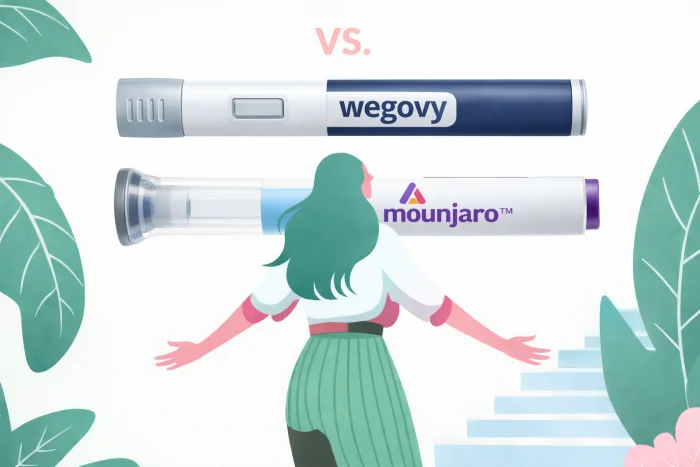
WHAT YOU NEED TO KNOW FIRST
The Key Difference: FDA Approvals
Important: Different FDA-Approved Uses
Mounjaro is NOT FDA-approved for weight loss. It's approved only for type 2 diabetes. When people use Mounjaro for weight loss, it's "off-label" use.
Zepbound is the same drug as Mounjaro (both contain tirzepatide) but is FDA-approved for chronic weight management. If weight loss is your primary goal, Zepbound is the appropriate on-label choice.
Wegovy is FDA-approved for weight loss in adults with obesity or overweight with at least one weight-related condition.
This distinction matters for insurance coverage. Many insurers won't cover Mounjaro for weight loss since it's off-label, but may cover Zepbound or Wegovy for the same purpose. See our Wegovy vs Zepbound comparison for an apples-to-apples comparison of drugs FDA-approved for weight loss.
Why does this search exist? Mounjaro gained popularity in 2022-2023 when Zepbound wasn't yet available. Patients with type 2 diabetes lost significant weight on Mounjaro, generating interest from those without diabetes. Now that Zepbound exists, the comparison is more commonly Wegovy vs Zepbound—but we'll address the Mounjaro question since many people still search for it.
MOUNJARO VS WEGOVY AT A GLANCE
Quick Comparison
Both medications produce substantial weight loss—but they're FDA-approved for different conditions. Here's how they compare:
| Feature | Mounjaro | Wegovy |
|---|---|---|
| Active Ingredient | Tirzepatide | Semaglutide |
| Manufacturer | Eli Lilly | Novo Nordisk |
| FDA Approval | Type 2 Diabetes only | Weight management + CV risk reduction |
| How It Works | Dual GIP/GLP-1 agonist | GLP-1 agonist only |
| Avg. Weight Loss | ~20% at 72 weeks (in trials) | ~15% at 68 weeks (in trials) |
| Dosing | Weekly injection (2.5–15 mg) | Weekly injection (0.25–2.4 mg) or daily pill |
| Oral Option | Not available | Yes — FDA approved Dec 2025[9] |
| List Price | ~$1,069/month | ~$1,349/month |
| Weight-Loss Alternative | Zepbound (same drug, approved for obesity) | — |
Bottom line: If you have type 2 diabetes, Mounjaro may be appropriate. If your primary goal is weight loss (with or without diabetes), Wegovy or Zepbound are the FDA-approved options.
MECHANISM OF ACTION
How They Work
Both medications mimic natural gut hormones that regulate appetite and blood sugar—but Mounjaro targets two pathways while Wegovy targets one.
Mounjaro (Tirzepatide)
Dual GIP/GLP-1 Receptor Agonist
- Mimics both GIP (glucose-dependent insulinotropic polypeptide) and GLP-1 (glucagon-like peptide-1)
- Reduces appetite through two complementary pathways
- Improves insulin sensitivity through dual mechanism
- May enhance fat metabolism beyond GLP-1 alone
- Same drug as Zepbound (different brand names)
Wegovy (Semaglutide)
GLP-1 Receptor Agonist
- Mimics only GLP-1 (glucagon-like peptide-1)
- Reduces appetite by signaling fullness to the brain
- Slows stomach emptying
- Proven cardiovascular benefits (SELECT trial)[6]
- Same drug as Ozempic (different doses/indications)
Why the Dual Mechanism Matters
GIP and GLP-1 work together to produce better results than either alone. While GLP-1 reduces appetite and slows digestion, GIP helps your body process food more efficiently. This combined action explains why tirzepatide (Mounjaro/Zepbound) produces more weight loss than semaglutide (Wegovy) in clinical trials.[1]
CLINICAL TRIAL DATA
Weight Loss Results
Both medications have been studied extensively. Here's how they compare in clinical trials:
SURMOUNT Trials (Tirzepatide/Mounjaro)
Note: These trials used tirzepatide, the active ingredient in both Mounjaro and Zepbound.
| Trial | Population | Weight Loss (15mg) | vs. Placebo |
|---|---|---|---|
| SURMOUNT-1 | Adults with obesity (no diabetes) | 20.9% at 72 weeks[2] | vs. 3.1% |
| SURMOUNT-2 | Adults with obesity + T2D | 14.7% at 72 weeks[3] | vs. 3.2% |
STEP Trials (Semaglutide/Wegovy)
| Trial | Population | Weight Loss (2.4mg) | vs. Placebo |
|---|---|---|---|
| STEP 1 | Adults with obesity (no diabetes) | 14.9% at 68 weeks[4] | vs. 2.4% |
| STEP 2 | Adults with obesity + T2D | 9.6% at 68 weeks[5] | vs. 3.4% |
SURMOUNT-5: Head-to-Head Comparison (2025)
In 2025, the SURMOUNT-5 trial directly compared tirzepatide vs. semaglutide in 751 adults with obesity (without diabetes)—the first head-to-head randomized trial:
| Medication | Weight Loss at 72 Weeks | Statistical Difference |
|---|---|---|
| Tirzepatide (10-15mg) | −20.2% | P<0.001[11] |
| Semaglutide (1.7-2.4mg) | −13.7% |
Summary: Tirzepatide Produces More Weight Loss
The SURMOUNT-5 head-to-head trial confirmed tirzepatide's superiority: patients lost 20.2% of body weight vs. 13.7% with semaglutide at 72 weeks (P<0.001). The dual GIP/GLP-1 mechanism provides approximately 6-7 additional percentage points of weight loss.[11]
For a 250 lb person, this translates to roughly 50 lbs with tirzepatide vs. 34 lbs with semaglutide.
TOLERABILITY COMPARISON
Side Effects
Both medications cause similar gastrointestinal side effects, especially during dose escalation. These typically improve over time as your body adjusts.
| Side Effect | Mounjaro | Wegovy |
|---|---|---|
| Nausea | 18-31% (dose-dependent) | 44% |
| Diarrhea | 12-21% | 30% |
| Constipation | 6-11% | 24% |
| Vomiting | 5-9% | 24% |
| Injection site reactions | 3-7% | 0.7% |
Note: Side effect rates vary between trials. The rates above are approximations from phase 3 trials for each medication.[7]
Serious Risks (Both Medications)
Important Safety Information
Both Mounjaro and Wegovy carry warnings for:
- Pancreatitis (inflammation of the pancreas)
- Gallbladder problems including gallstones
- Acute kidney injury (especially with dehydration)
- Thyroid tumors (boxed warning—avoid if you or family members have had medullary thyroid cancer or MEN 2 syndrome)
Key finding: GI side effects are generally similar between the two medications. Individual responses vary—some people tolerate one better than the other. Both improve with gradual dose escalation.
PRICING & SAVINGS PROGRAMS
Cost Comparison
Without insurance, both medications are expensive. Here's how they compare:
| Cost Factor | Mounjaro | Wegovy |
|---|---|---|
| List Price (monthly) | ~$1,069 | ~$1,349 |
| Annual Cost (list) | ~$12,800 | ~$16,200 |
| Manufacturer Savings | $25/month (with commercial insurance) | Up to $100 per 1-month fill (with commercial insurance) |
| Cash Pay Option | No direct program (try Zepbound via LillyDirect) | NovoCare options available |
If Weight Loss Is Your Goal: Consider Zepbound
If you don't have diabetes and want tirzepatide for weight loss, Zepbound is the appropriate medication—and it has better cash-pay options through LillyDirect: $299/month (2.5mg), $399/month (5mg), or $449/month (7.5-15mg, with on-time refills) for vials or the KwikPen.[8] Using Mounjaro off-label for weight loss may result in insurance denials and higher out-of-pocket costs.
Note: Savings card terms change frequently. Verify current offers at manufacturer websites.
WHAT'S COVERED AND WHAT ISN'T
Insurance Coverage
Insurance coverage depends heavily on your diagnosis and the medication's FDA-approved use.
Mounjaro Coverage
Mounjaro: Type 2 Diabetes Only
Most insurers only cover Mounjaro if you have type 2 diabetes. If you're using it off-label for weight loss (without diabetes), expect denials. Even with diabetes, prior authorization is typically required.
Wegovy Coverage
Wegovy is FDA-approved for weight loss, but coverage is still limited:
- Many employer plans exclude weight loss drugs
- By law, basic Medicare Part D coverage excludes weight-loss drugs, but the Medicare GLP-1 Bridge covers Wegovy for $50 per monthly fill for eligible beneficiaries (with conditions)
- Medicaid coverage varies by state
- Prior authorization is almost always required
- Wegovy's cardiovascular indication (for adults with established cardiovascular disease and either obesity or overweight) may open coverage pathways for that use
Coverage Summary
| Scenario | Mounjaro | Wegovy |
|---|---|---|
| Type 2 Diabetes (primary goal: glucose control) | Often covered | Not typically (off-label) |
| Weight Loss (no diabetes) | Usually denied (off-label) | May be covered (if plan includes) |
| Cardiovascular Risk Reduction | Not FDA-approved for this | FDA-approved; may improve coverage |
Medicare and weight-loss GLP-1s: the Medicare GLP-1 Bridge
Through the Medicare GLP-1 Bridge (July 1, 2026 – December 31, 2027), a temporary CMS demonstration that runs outside the Part D benefit, people with eligible Part D coverage can get Wegovy, Foundayo or the Zepbound KwikPen for weight loss for $50 a month, if they meet CMS’s eligibility criteria and their prescriber gets prior authorization.
- Who qualifies: Age 18+ and BMI ≥35; or BMI ≥30 with HFpEF, uncontrolled high blood pressure or CKD stage 3a+; or BMI ≥27 with prediabetes, a prior heart attack or stroke, or symptomatic PAD.
- Who doesn’t: Not eligible if you have type 2 diabetes, moderate-to-severe obstructive sleep apnea, or noncirrhotic MASH with moderate-to-advanced liver fibrosis (F2–F3), or if your Part D plan paid for a GLP-1 for you at any time in 2026.
- Cost: $50 per monthly fill. Does not count toward the Part D deductible or out-of-pocket cap. Extra Help (LIS) does not lower it. Not eligible for the Medicare Prescription Payment Plan. Coupons and discount programs can’t be applied.
- No opt-in needed: Part D plans and pharmacies don’t opt in, and you don’t enroll separately; your prescriber must get prior authorization.
- If it’s denied: No appeals process for a Bridge prior-authorization denial: your prescriber can resubmit with more information (Part D appeal rights for Part D coverage decisions still apply).
Source: CMS, Medicare GLP-1 Bridge · Facts in this box verified October 5, 2026
Your GLP-1 coverage,
denied approved
If your coverage is denied, Honest Care can help you appeal with personalized, evidence-backed letters.
Need help with coverage?
Get Started FreeMAKING YOUR DECISION
Which Should You Choose?
The "right" medication depends on your specific health situation:
Choose Mounjaro if...
- You have type 2 diabetes — This is Mounjaro's FDA-approved use
- Your insurance covers it for diabetes — Many plans cover Mounjaro for T2D management
- You want both glucose control AND weight loss — Mounjaro excels at both
- Your doctor recommends it for your diabetes — Trust their clinical judgment
Choose Wegovy if...
- Weight loss is your primary goal (no diabetes) — Wegovy is FDA-approved for this
- You have cardiovascular disease or high CV risk — Wegovy reduces heart attacks and strokes by 20%[6]
- Your insurance covers it — Some plans cover Wegovy for weight loss
- You prefer a pill over injections — Oral Wegovy launched January 2026[9]
Consider Zepbound instead if...
- You want tirzepatide for weight loss — Zepbound is the FDA-approved version for obesity
- You don't have diabetes — Mounjaro off-label use often gets denied
- Maximum weight loss is your priority — SURMOUNT-5 showed 20.2% with tirzepatide vs 13.7% with semaglutide
- You're paying cash — LillyDirect offers Zepbound vials at $299/month (2.5mg), $399/month (5mg), or $449/month (7.5-15mg)
See our Wegovy vs Zepbound comparison for a detailed breakdown.
Talk to your doctor if...
- You have a history of pancreatitis or gallbladder disease
- You or a family member has had medullary thyroid cancer or MEN 2
- You're pregnant, planning pregnancy, or breastfeeding
- You have severe gastrointestinal conditions
- You're taking other diabetes medications
The Practical Reality
For many patients, the choice comes down to insurance coverage and cost. Both tirzepatide and semaglutide are highly effective—getting one covered and affordable is often more important than which specific one you take. Work with your healthcare provider to find the option that's accessible for you.
MOUNJARO VS WEGOVY
Frequently Asked Questions
The SURMOUNT-5 head-to-head trial (2025) confirmed that tirzepatide produces 20.2% weight loss vs. 13.7% with semaglutide at 72 weeks. However, Mounjaro is only FDA-approved for type 2 diabetes, not weight loss. If weight loss is your primary goal, the appropriate comparison is Wegovy vs Zepbound—both are FDA-approved for weight management.
Technically yes, but it's "off-label" use since Mounjaro is only FDA-approved for type 2 diabetes. This creates problems: insurance will likely deny coverage, and you may pay full price (~$1,069/month). Zepbound is the same drug (tirzepatide) but FDA-approved for weight loss—it's the appropriate choice if you don't have diabetes.
Yes, they contain the same active ingredient (tirzepatide) at the same doses. The difference is FDA-approved indications: Mounjaro is approved for type 2 diabetes, Zepbound is approved for chronic weight management. They're essentially the same drug with different brand names and approved uses.
Wegovy's list price (~$1,349/month) is higher than Mounjaro's (~$1,069/month), likely due to market positioning and demand. However, actual out-of-pocket cost depends on insurance coverage. If your insurance covers one but not the other, the covered medication is almost always cheaper regardless of list price.
Side effect profiles are similar—both cause primarily GI effects (nausea, diarrhea, constipation) that typically improve over time. Some studies suggest Mounjaro may have slightly lower GI side effect rates at equivalent efficacy levels, but individual responses vary significantly. If you had issues with one, you may tolerate the other better.
Yes, under medical supervision. Your doctor will determine the appropriate starting dose based on your current medication and response. Common reasons to switch:
- Insurance changes — Your plan dropped one medication
- Side effect tolerance — Some patients tolerate semaglutide or tirzepatide better
- Efficacy plateau — Weight loss has stalled on current medication
- Cost — Better savings program available for the other drug
When switching, expect some GI side effects as your body adjusts. Most doctors don't require a "washout" period between medications.
Most patients notice appetite reduction within the first 1-2 weeks. Measurable weight loss typically begins by week 4-8. Clinical trials show the most significant results at 68-72 weeks (about 15-18 months). Both medications require gradual dose escalation over 4-5 months to reach the maintenance dose, so patience is important.
Wegovy now has a daily oral tablet (FDA-approved December 2025) with a January 2026 launch.[9] The OASIS-4 trial showed 13.6% weight loss (treatment-policy analysis) to 16.6% (full adherence) at 64 weeks. Mounjaro does not have an oral option. Oral tirzepatide is in development but not yet approved. If avoiding needles is important, oral Wegovy is currently the only option.
Medicare Part D may cover Mounjaro for type 2 diabetes, but coverage varies by plan. By law, basic Part D coverage excludes drugs used for weight loss, but the Medicare GLP-1 Bridge (July 1, 2026 – December 31, 2027) covers Wegovy (injection and pill) for weight loss at $50 per monthly fill for eligible beneficiaries, with conditions. Mounjaro is not a Bridge drug.
Learn More About These Medications
Explore complete guides for coverage, costs, and appeals:
Your GLP-1 coverage,
denied approved
✓ Free Templates✓ Premium Support Available
I was denied coverage for...
Get startedReferences
- Rosenstock J, et al. (2021). "Efficacy and safety of a novel dual GIP and GLP-1 receptor agonist tirzepatide." Lancet. https://pubmed.ncbi.nlm.nih.gov/34170647/
- Jastreboff AM, et al. (2022). "Tirzepatide Once Weekly for the Treatment of Obesity." N Engl J Med. SURMOUNT-1. https://pubmed.ncbi.nlm.nih.gov/35658024/
- Garvey WT, et al. (2023). "Tirzepatide once weekly for the treatment of obesity in people with type 2 diabetes." Lancet Diabetes Endocrinol. SURMOUNT-2. https://pubmed.ncbi.nlm.nih.gov/37385275/
- Wilding JPH, et al. (2021). "Once-Weekly Semaglutide in Adults with Overweight or Obesity." N Engl J Med. STEP 1. https://pubmed.ncbi.nlm.nih.gov/33567185/
- Davies M, et al. (2021). "Semaglutide 2.4 mg once weekly in adults with overweight or obesity, and type 2 diabetes." Lancet. STEP 2. https://pubmed.ncbi.nlm.nih.gov/33129973/
- Lincoff AM, et al. (2023). "Semaglutide and Cardiovascular Outcomes in Obesity without Diabetes." N Engl J Med. SELECT trial. https://pubmed.ncbi.nlm.nih.gov/37952131/
- GoodRx. (2025). "Mounjaro vs. Wegovy: Differences, Similarities, and Which Is Better." https://www.goodrx.com/conditions/weight-loss/mounjaro-vs-wegovy
- Eli Lilly. (2024). "LillyDirect: Zepbound Pricing and Access." https://lillydirect.lilly.com/
- Novo Nordisk. (2025). "Novo Nordisk's Wegovy® pill, the first and only oral GLP-1 for weight loss in adults." Press release, December 22, 2025. PRNewswire
- U.S. FDA. (2022). "FDA Approves Mounjaro for Type 2 Diabetes." https://www.fda.gov/drugs/news-events-human-drugs/fda-approves-novel-dual-targeted-treatment-type-2-diabetes
- Aronne LJ, et al. (2025). "Tirzepatide versus Semaglutide for Weight Loss in Adults with Obesity." N Engl J Med. SURMOUNT-5. NCT05822830. ClinicalTrials.gov
- Centers for Medicare & Medicaid Services (CMS). (2025). "Medicare BALANCE Model: Better Approaches to Lifestyle and Nutrition for Comprehensive hEalth." Announced December 23, 2025. CMS.gov
Last updated October 6, 2026
Disclaimer
The information on this page is for educational and informational purposes only and is not intended as medical advice. Honest Care does not provide medical diagnosis, treatment, or individualized recommendations. Always seek the advice of your physician or other qualified healthcare professional regarding any medical condition or treatment.
While this content has been reviewed for accuracy and balance, new evidence may emerge after publication. Drug availability, indications, and insurance coverage can change over time. Honest Care makes no warranties as to completeness or currentness of the information and is not responsible for decisions made based on this content.