
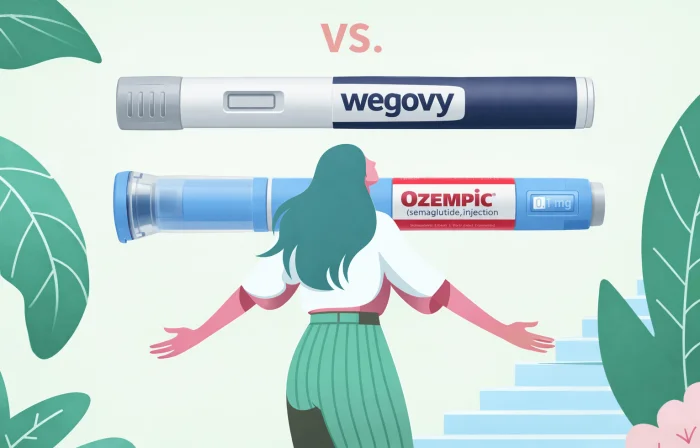
THE KEY DIFFERENCE
Same Drug, Different FDA Approvals
Wegovy and Ozempic Are the Same Medication
Both contain semaglutide, made by Novo Nordisk. The difference is the FDA-approved indication and dosing:
- Ozempic — FDA-approved for type 2 diabetes (max 2mg/week)
- Wegovy — FDA-approved for chronic weight management (2.4mg/week injection or 25mg daily pill)
This distinction matters for insurance. If you have type 2 diabetes, Ozempic is often easier to get covered. If your primary goal is weight loss (without diabetes), Wegovy is the appropriate medication—but coverage is more limited since many plans exclude weight loss drugs.
Why Two Brand Names?
Novo Nordisk developed semaglutide first as Ozempic for diabetes (2017), then conducted weight loss trials at higher doses and launched Wegovy (2021) specifically for obesity treatment. The FDA considers them separate medications because:
- Different approved indications (diabetes vs. weight management)
- Different dosing schedules and maximum doses
- Different clinical trial programs (SUSTAIN vs. STEP)
WEGOVY VS OZEMPIC AT A GLANCE
Quick Comparison
| Feature | Wegovy | Ozempic |
|---|---|---|
| Active Ingredient | Semaglutide | Semaglutide |
| Manufacturer | Novo Nordisk | Novo Nordisk |
| FDA Approval | Weight management + CV risk | Type 2 diabetes |
| Max Weekly Dose | 2.4 mg (injection) | 2.0 mg |
| Oral Option | Yes — 25mg daily pill (Jan 2026)[1] | No (Rybelsus is oral semaglutide for diabetes) |
| Pen Type | Single-dose (4 pens/month) | Multi-dose (1 pen/month) |
| Avg. Weight Loss | ~15% at 68 weeks[2] | ~7% (at diabetes doses)[3] |
| CV Benefit | 20% reduction in heart attacks/strokes[4] | CV benefit shown in diabetes trials |
| List Price | ~$1,349/month | ~$1,027/month |
Key takeaway: If weight loss is your goal, Wegovy's higher dose (2.4mg vs 2mg) produces roughly double the weight loss. If you have diabetes, Ozempic may be easier to get covered and still provides meaningful weight loss.
HOW THEY'RE PRESCRIBED
Dosing Differences
Both medications start at the same low dose (0.25mg) and gradually increase to minimize side effects. The key difference is the maximum dose.
Wegovy Dosing
Escalation over 16-20 weeks
- Weeks 1-4: 0.25 mg/week
- Weeks 5-8: 0.5 mg/week
- Weeks 9-12: 1.0 mg/week
- Weeks 13-16: 1.7 mg/week
- Week 17+: 2.4 mg/week (maintenance)
Single-dose pens — use one pen per week
Ozempic Dosing
Escalation over 8+ weeks
- Weeks 1-4: 0.25 mg/week
- Weeks 5-8: 0.5 mg/week
- Week 9+: 1.0 mg/week (if needed)
- Optional: 2.0 mg/week (max dose)
Multi-dose pen — one pen lasts ~1 month
Oral Wegovy (New in 2026)
In January 2026, Novo Nordisk launched oral Wegovy—the first pill form of semaglutide approved for weight loss.[1] Key points:
- Dose: 25mg daily tablet (vs 2.4mg weekly injection)
- How to take: On empty stomach with small sip of water, 30 min before food
- Weight loss: ~14% at 68 weeks (comparable to injection)[5]
- Price: Same as injection (~$1,349/month list)
There is no oral Ozempic. Rybelsus is oral semaglutide but only FDA-approved for diabetes at lower doses (7-14mg).
CLINICAL TRIAL DATA
Weight Loss Results
Because Wegovy uses a higher dose, it produces more weight loss than Ozempic at typical diabetes doses.
| Trial | Medication | Weight Loss | Duration |
|---|---|---|---|
| STEP 1 | Wegovy 2.4mg (no diabetes) | 14.9%[2] | 68 weeks |
| STEP 2 | Wegovy 2.4mg (with T2D) | 9.6%[6] | 68 weeks |
| SUSTAIN 1 | Ozempic 1.0mg (with T2D) | ~6-7%[3] | 30-56 weeks |
Why the Difference?
Higher dose = more weight loss. Wegovy's 2.4mg dose is 20% higher than Ozempic's maximum 2mg. Additionally, people with diabetes tend to lose less weight on GLP-1s than people without diabetes—so Ozempic trials (diabetes patients) show lower weight loss than Wegovy trials (obesity patients without diabetes).
Cardiovascular Benefits
The SELECT trial showed Wegovy reduces major cardiovascular events by 20% in people with obesity and heart disease (but without diabetes).[4] This led FDA to approve Wegovy injection on March 8, 2024 to reduce cardiovascular risk in adults with established cardiovascular disease and either obesity or overweight (the tablets’ CV indication came with their December 22, 2025 approval).[8]
Ozempic has also shown cardiovascular benefits in the SUSTAIN-6 trial for diabetes patients, but it's not FDA-approved specifically for CV risk reduction.
WHAT TO EXPECT
Side Effects
Since both medications contain the same active ingredient, side effects are nearly identical. However, side effects may be more common with Wegovy due to the higher dose.
| Side Effect | Wegovy (2.4mg) | Ozempic (1-2mg) |
|---|---|---|
| Nausea | 44%[9] | ~20%[10] |
| Diarrhea | 30% | 8-12% |
| Vomiting | 25% | ~9% |
| Constipation | 24% | 5-8% |
| Abdominal Pain | 21% | ~5% |
Side effects are typically worst during dose escalation and improve over time. Most patients tolerate both medications well after the first few months.
Serious Risks (Both Medications)
Important Safety Information
Both Wegovy and Ozempic carry warnings for:
- Thyroid tumors (boxed warning—avoid if history of medullary thyroid cancer or MEN 2)
- Pancreatitis
- Gallbladder problems
- Acute kidney injury
- Diabetic retinopathy complications (Ozempic)
PRICING & SAVINGS
Cost Comparison
| Cost Factor | Wegovy | Ozempic |
|---|---|---|
| List Price (monthly) | ~$1,349 | ~$1,027 |
| Annual Cost (list) | ~$16,200 | ~$12,300 |
| NovoCare Self-Pay | $199–$349/month (intro offer on the 0.25 mg and 0.5 mg doses)[7] | $199-$349/month (intro offers)[7] |
| TrumpRx Direct | Lists Novo's own self-pay price | Lists Novo's own self-pay price |
| With Insurance | as little as $25 with the savings offer (if covered) | $0-$25/month (if covered) |
The Real Cost Depends on Coverage
List prices matter less than whether your insurance covers the medication. Ozempic is often easier to get covered (for diabetes), while Wegovy coverage is more limited. If your insurance covers either one, expect copays of $0-$50/month with a savings card.
WHICH IS EASIER TO GET COVERED?
Insurance Coverage
Ozempic Coverage
Generally easier to get covered because it's FDA-approved for type 2 diabetes, which most insurance plans cover. Prior authorization is typically required, but approval rates are higher than for weight loss drugs.
Wegovy Coverage
More difficult because many plans exclude weight loss medications. However, Wegovy's cardiovascular indication (for adults with established cardiovascular disease and either obesity or overweight; injection approved March 2024) may open a coverage pathway for that use.
| Your Situation | Best Option | Coverage Likelihood |
|---|---|---|
| Type 2 diabetes | Ozempic | High (on-label) |
| Obesity without diabetes | Wegovy | Variable (check your plan) |
| Heart disease + obesity | Wegovy (CV indication) | Improving (new indication) |
| Medicare | Ozempic (if diabetic) | Wegovy: Medicare GLP-1 Bridge, $50 per monthly fill (with conditions) |
Medicare and weight-loss GLP-1s: the Medicare GLP-1 Bridge
Through the Medicare GLP-1 Bridge (July 1, 2026 – December 31, 2027), a temporary CMS demonstration that runs outside the Part D benefit, people with eligible Part D coverage can get Wegovy, Foundayo or the Zepbound KwikPen for weight loss for $50 a month, if they meet CMS’s eligibility criteria and their prescriber gets prior authorization.
- Who qualifies: Age 18+ and BMI ≥35; or BMI ≥30 with HFpEF, uncontrolled high blood pressure or CKD stage 3a+; or BMI ≥27 with prediabetes, a prior heart attack or stroke, or symptomatic PAD.
- Who doesn’t: Not eligible if you have type 2 diabetes, moderate-to-severe obstructive sleep apnea, or noncirrhotic MASH with moderate-to-advanced liver fibrosis (F2–F3), or if your Part D plan paid for a GLP-1 for you at any time in 2026.
- Cost: $50 per monthly fill. Does not count toward the Part D deductible or out-of-pocket cap. Extra Help (LIS) does not lower it. Not eligible for the Medicare Prescription Payment Plan. Coupons and discount programs can’t be applied.
- No opt-in needed: Part D plans and pharmacies don’t opt in, and you don’t enroll separately; your prescriber must get prior authorization.
- If it’s denied: No appeals process for a Bridge prior-authorization denial: your prescriber can resubmit with more information (Part D appeal rights for Part D coverage decisions still apply).
Source: CMS, Medicare GLP-1 Bridge · Facts in this box verified October 5, 2026
Your GLP-1 coverage,
denied approved
Denied coverage for Wegovy or Ozempic? Honest Care can help you appeal with evidence-backed letters.
Need help with coverage?
Get Started FreeDECISION GUIDE
Which Should You Choose?
Choose Ozempic if...
- You have type 2 diabetes — This is Ozempic's FDA-approved use
- Insurance is a concern — Ozempic is more likely to be covered
- You prefer fewer pens — One multi-dose pen lasts a month
- You're on Medicare — Ozempic may be covered for diabetes through Part D (Wegovy for weight loss goes through the Medicare GLP-1 Bridge instead, with conditions)
Choose Wegovy if...
- Weight loss is your primary goal — Wegovy's higher dose produces ~15% weight loss vs ~7% for Ozempic
- You have heart disease — Wegovy is FDA-approved for CV risk reduction
- Your insurance covers it — Some commercial plans cover Wegovy
- You want a pill option — Oral Wegovy launched January 2026
Consider Zepbound/Mounjaro instead if...
- You want maximum weight loss — Tirzepatide produces ~20% vs ~15% for semaglutide
- Semaglutide didn't work well for you — Different mechanism (dual GIP/GLP-1)
- You had GI issues with Wegovy/Ozempic — Some tolerate tirzepatide better
See our Wegovy vs Zepbound comparison for details.
Can I Switch Between Them?
Yes, you can switch from Ozempic to Wegovy (or vice versa) under medical supervision. Since they're the same drug, there's no washout period needed. Your doctor will determine the equivalent starting dose. Common reasons to switch: insurance changes, seeking higher dose for more weight loss, or tolerability issues.
WEGOVY VS OZEMPIC
Frequently Asked Questions
Yes, both contain semaglutide made by Novo Nordisk. The differences are: (1) FDA-approved indication—Wegovy for weight loss, Ozempic for diabetes; (2) Maximum dose—Wegovy 2.4mg vs Ozempic 2mg; (3) Pen type—Wegovy uses single-dose pens, Ozempic uses multi-dose pens.
Wegovy produces roughly double the weight loss (~15% vs ~7%) because of the higher dose (2.4mg vs 1-2mg). If maximum weight loss is your goal and you don't have diabetes, Wegovy is the better choice. If you have diabetes, you may still lose meaningful weight on Ozempic while also controlling blood sugar.
Technically yes (it's called "off-label" use), and some doctors do prescribe it this way. However, insurance almost never covers Ozempic for weight loss without a diabetes diagnosis. You'd likely pay full price (~$1,027/month). Wegovy is the appropriate on-label choice for weight loss without diabetes.
Ozempic's list price (~$1,027/month) is lower than Wegovy's (~$1,349/month), likely because: (1) Ozempic launched earlier (2017 vs 2021); (2) Different market positioning; (3) Ozempic uses multi-dose pens (more efficient). However, actual out-of-pocket cost depends on insurance coverage—whichever your plan covers will be cheaper for you.
Yes, under medical supervision. Since they're the same drug, there's no washout period needed. Your doctor will determine the right dose. Common reasons to switch: wanting more weight loss (higher dose), insurance changes, or adding the CV risk reduction benefit. Expect some GI side effects as you adjust to the higher dose.
Oral Wegovy (25mg daily tablet) was FDA-approved in December 2025 and launched January 2026. It shows ~14% weight loss—comparable to the injection.[1] There is no oral Ozempic. Rybelsus is oral semaglutide but only FDA-approved for diabetes at lower doses (7-14mg).
Side effects are similar since both contain semaglutide. However, Wegovy tends to have more frequent GI side effects (nausea, vomiting, diarrhea) because of the higher dose. If you're sensitive to side effects, starting on Ozempic's lower doses might be more tolerable, though you'll see less weight loss.
Medicare Part D may cover Ozempic for type 2 diabetes (varies by plan). By law, basic Part D coverage excludes Wegovy when used for weight loss, but the Medicare GLP-1 Bridge (July 1, 2026 – December 31, 2027) covers Wegovy (injection and pill) for weight loss at $50 per monthly fill for eligible beneficiaries, with conditions. Ozempic is not a Bridge drug.
Learn More About These Medications
Explore complete guides for coverage, costs, and appeals:
Your GLP-1 coverage,
denied approved
✓ Free Templates✓ Premium Support Available
I was denied coverage for...
Get startedReferences
- Novo Nordisk. (2025). "Wegovy pill, the first and only oral GLP-1 for weight loss in adults." Press release, December 22, 2025. PRNewswire
- Wilding JPH, et al. (2021). "Once-Weekly Semaglutide in Adults with Overweight or Obesity." N Engl J Med. 384:989-1002. STEP 1 trial. PMID 33567185
- Sorli C, et al. (2017). "Efficacy and safety of once-weekly semaglutide monotherapy versus placebo in patients with type 2 diabetes (SUSTAIN 1)." Lancet Diabetes Endocrinol. 5(4):251-260. PMID 28110912
- Lincoff AM, et al. (2023). "Semaglutide and Cardiovascular Outcomes in Obesity without Diabetes." N Engl J Med. 389:2221-2232. SELECT trial. PMID 37952131
- Aroda VR, et al. (2024). "Oral Semaglutide 25 mg in Adults with Overweight or Obesity." OASIS 4 trial results. PubMed
- Davies M, et al. (2021). "Semaglutide 2.4 mg once weekly in adults with overweight or obesity, and type 2 diabetes (STEP 2)." Lancet. 397(10278):971-984. PMID 33667417
- Novo Nordisk. (2026). "Wegovy and Ozempic Savings Programs." Wegovy.com, Ozempic.com
- U.S. FDA. (2024). "FDA Approves First Treatment to Reduce Risk of Serious Heart Problems Specifically in Adults with Obesity or Overweight." March 8, 2024. FDA.gov
- U.S. FDA. (2024). Wegovy Prescribing Information. Adverse reactions data from clinical trials. FDA Prescribing Label
- U.S. FDA. (2022). Ozempic Prescribing Information. SUSTAIN trial adverse reactions. FDA Prescribing Label
- CMS. (2025). "CMS Launches Voluntary Model to Expand Access to Life-Changing Medicines to Promote Healthier Living." BALANCE Model announcement. CMS.gov
Last updated October 6, 2026
Disclaimer
The information on this page is for educational and informational purposes only and is not intended as medical advice. Honest Care does not provide medical diagnosis, treatment, or individualized recommendations. Always seek the advice of your physician or other qualified healthcare professional regarding any medical condition or treatment.
While this content has been reviewed for accuracy and balance, new evidence may emerge after publication. Drug availability, indications, and insurance coverage can change over time. Honest Care makes no warranties as to completeness or currentness of the information and is not responsible for decisions made based on this content.